ISmall-Business.net

Intelligent Business Solutions

  • Home
  • Strategy
    • Small Business Strategy
      • Combining Niches to Maximize Profit Potential
      • High Ticket Versus Volume Niche Selection
      • How to Know When to Cut a Business or Niche Loose
      • Never Put All Your Eggs in One Basket
    • Sales Strategy
      • Facebook Networking Versus Paid Advertising
      • Brainstorming a Successful Sales Funnel
      • Best Practices for Profitable List Building
      • Backend Sales Strategy Tips
      • A Better Way to Use Webinars for Profits
      • Creating a Welcome Email That Makes Money
    • Production Strategy
    • Human resource strategy
  • Management
    • Business action plan
      • 7 Things to Send JVs to Get Them Onboard
      • Don’t Make JV Promises You Can’t Keep
      • How to Host a Challenge and Maximize Profits
    • Small Business Management
      • Putting Profit Tasks First During Time Management
      • How Self Doubt Sabotages Your Financial Success
      • Repurpose Your Content to Save and Make Money
    • Business Management Topics
      • Fighting the Stigma of Failure
      • Figuring Out the Perfect Launch Date and Time
      • Bonus Creation That Catapults You to Leaderboard Domination
      • Do Customers Prefer Video or Text Courses
      • Minimize Your Risk of Refunds with These 5 Tips
      • How Often Should You Email Promo Material
      • Narrow Niche Domination
      • Perfecting the Launch Process for Increased Profits
    • Business Management Blogs
      • Nobody Expects a Perfect Expert
  • Ideas
    • Find business ideas
      • 5 Lucrative Non IM Niches
      • 6 Niches That Are Hot on Social Networks
      • Are PLR Stores a Viable Way to Make Money
      • How to Know If a Membership Site Is Right for You
    • Idea feasibility
      • How to Make Money Off a $7 Product
      • Recurring Income Options
    • 10 top business ideas
      • Could Coaching Bring in More Money Than Products
      • Individual Coaching Versus Group Coaching Profits
      • Building a Reputation as a Powerful Affiliate
      • Pinterest Profit Niches
    • Low cost business ideas
      • Making Money Off eBooks and Reports
  • Valuation
    • Business Valuation
    • Increase business valuation
      • Making Wise Investments in Tools to Further Your Business
    • Business Valuation Methods
    • Understand business valuation
  • About
    • About Me
    • Blog
    • Contact Us
    • Sitemap
    • Privacy Policy
  • Strategy
  • Supply Chain
  • Customer Focus
  • Entrepreneur
  • Biz Opportunities
You are here: Home / Archives for Asif Nazeer

Secrets of Gathering Customer Data Revealed at this Upcoming Event

July 27, 2019 by Asif Nazeer Leave a Comment

[ad_1]

Listening to what your customers say has always been important, but with today’s technology, it is a must.

Because your customers can get in touch with your business on multiple channels at all hours of the day, it is essential to keep track of the conversation and respond accordingly.

“Listening to the Voice of the Customer” is a workshop designed to teach you how to listen to your customers. Applied Marketing Science (AMS) is going to hold the two-day workshop at the University Club of Chicago from October 16-17, 2019.

In this workshop, you will learn how to target and survey your customers by asking them the right question. The workshop then shows you what to do with this information by analyzing the customer interviews and extracting what they need.

The hands-on activity includes exercises to build skills along with exposure to the latest applications in areas such as machine learning and journey mapping.

You can download the course overview here (PDF).

Enter Discount Code SMALLBIZ and Get $100 off the course registration.

Click the red button and register.

Register Now


Featured Events, Contests and Awards

Listening to the Voice of the Customer Listening to the Voice of the Customer
October 16, 2019, Chicago, Ill.

Led by veteran product development and market research experts, this course will introduce Voice of the Customer (VOC) market research and teach you to use it to accelerate innovation in business-to-business markets. The workshop uses a lively, interactive format with numerous hands-on activities and practice exercises to build skills and will also expose you to the latest applications of these techniques in areas such as machine learning and journey mapping.
Discount Code
SMALLBIZ ($100 Off)


More Events

  • Developing an HR Strategy (Seminar)
    August 14, 2019, San Francisco, Calif.
  • Funding a Business Course – Application Deadline
    August 23, 2019, Oakland, Calif.
  • World Blockchain Roadshow
    August 26, 2019, Multiple Cities
  • TECHSPO Sydney 2019
    August 28, 2019, Sydney, Australia
  • DigiMarCon Europe 2019 – Digital Marketing Conference & Exhibition
    September 12, 2019, Amsterdam, the Netherlands
  • DigiMarCon Asia Pacific 2019 – Digital Marketing Conference & Exhibition
    September 18, 2019, Singapore
  • World’s Largest MBA Tour is Coming to Philadelphia – Register for FREE
    September 30, 2019, Philadelphia, Pa.
  • DigiMarCon Singapore 2019 – Digital Marketing Conference & Exhibition
    October 02, 2019, Singapore
  • World’s Largest MBA Tour is Coming to Miami – Register for FREE
    October 16, 2019, Miami, Fla.
  • World’s Largest MBA Tour is Coming to Austin – Register for FREE
    October 21, 2019, Austin, Texas
  • TECHSPO Dubai 2019
    October 22, 2019, Dubai, United Arab Emirates
  • Rhodium Weekend
    October 24, 2019, Las Vegas, Nev.
  • World’s Largest MBA Tour is Coming to Denver – Register for FREE
    October 28, 2019, Denver, Colo.
  • Small Business Expo 2019 – LOS ANGELES (October 30, 2019)
    October 30, 2019, Los Angeles, Calif.
  • IMPACT>MOBILITY USA 2019
    November 04, 2019, San Diego, Calif.
  • National Small Business Week
    May 03, 2020, Online

More Contests

This weekly listing of small business events, contests and awards is provided as a community service by Small Business Trends.

You can see a full list of events, contest and award listings or post your own events by visiting the Small Business Events Calendar.

Image: Depositphotos.com


[ad_2]

Source link

Filed Under: Strategy

Quiz: Name That Entrepreneur TV Show!

July 25, 2019 by Asif Nazeer Leave a Comment

[ad_1]

Reality television shows have become popular – some wildly popular.  Among them are dozens of excellent shows that focus on business.  See if you can name the entrepreneur TV shows in our fast and fun quiz. Test your knowledge – take the quiz!

Entrepreneur TV Show Quiz


Results

–

Congratulations! You passed! Scroll down to see more details about each answer.

Sorry, maybe you need to watch more entrepreneur TV shows? Scroll down to see correct answers.

entrepreneur Tv shows - Shark Tank screen capture

#1 This business TV show is about entrepreneurs looking for investors.

Shark Tank features entrepreneurs who seek funding from a panel of investors to get their businesses to the next level. The investors are the “sharks in the tank” who decide whether to invest after seeing a presentation by the entrepreneur. Some of the presentations are very polished and impressive. Shark Tank is a must see for anyone thinking of starting a business and seeking funding. It’s especially good for entrepreneurs with consumer product ideas.

Image: ABC Network screen capture

restaurant-impossible-main-street-business-screen-capture

#2 This entrepreneur TV show features restaurant owners in trouble. The emotion can be raw.

In Restaurant Impossible, Chef Robert Irvine has just two days and a $10,000 budget to turn around a struggling restaurant. Often the biggest challenge is convincing restaurant owners of the need to change. Along the way, he also teaches them the basics of running a profitable restaurant.

This show is about Main Street small business. Every business owner can learn key principles of operating a business successfully, no what industry you are in.

Image: FoodNetwork screen capture

Pawn Stars screen capture

#3 This family business features quirky characters who buy and sell to make a profit.

Pawn Stars follows three generations of the Harrison family who run a large pawnshop in Las Vegas. The show features people who bring in items to sell. The items can be valuable antiques or collectibles — or mundane objects and even outright fakes. The family must use their knowledge and skills, aided by the occasional expert, to assess the value. Then they must use their negotiating skills to work a favorable deal so they can turn a profit upon resale.  Whether they finalize a deal or the disappointed seller walks away, it’s always interesting.

The “Old Man” has passed away but reruns are worth watching for the family-business dynamic as well as the pure entertainment value.

Image: History Channel screen shot


The Profit show

#4 This assertive CEO has been known to say “my way is the ONLY way” as he dispenses advice.

Marcus Lemonis is the CEO of multibillion-dollar corporation Camping World. But he also hosts The Profit, a business reality TV show where he helps turn around struggling companies. He will make a cash investment and take a stake in the company.

Lemonis claims to have turned around over 100 companies and holds strong opinions about what it takes for a business to survive.  He’s known for his “people, process, product” principle and for saying “when I have skin in the game, my way is the only way your business will survive.”

Image: CNBC screen capture

Bar Rescue screen capture

#5 This show features a business makeover – and sometimes the owners don’t like the advice!

Jon Taffer has owned or flipped more than 600 bars and nightclubs in his career. In Bar Rescue he, with the help of a few other experts, attempts to rescue a struggling bar. He starts with sending in his wife to do an undercover visit to diagnose the issues, while he and the experts watch remotely from the car. Then he brings in new technology, trains staff, improves the premises and sometimes rebrands the business.

At times the owners and staff are emotionally invested in the status quo. While they know they need help, they may resist change. Taffer’s strong style can make for some fiery scenes as owners are forced to confront what’s wrong and how to fix it. This show illustrates a niche of small business present in almost every Main Street in America.

Image: Spike / Paramount screen capture


INk Master screen shot

#6 Artisans showcase their talent and compete to win a $100,000 prize in this TV show.

In the show Ink Master, several renowned tattoo artists serve as judges where other top tattoo artists compete to display their creative and technical abilities. The challenges are varied. Artists tattoo people on the show. All artists compete for a cash prize and the publicity of getting featured in Inked Magazine. The judges don’t hold back in critiquing the work, so these artisans cannot have thin skin. But the end result is they hone their crafts, whether they win or not.

Image: Spike / Paramount screen capture

food-truck-race-show

#7 Business owners compete in vehicles for cash as the show travels to different locations.

In The Great Food Truck Race, Chef Tyler Florence hosts a competition among food truck purveyors. They visit different cities each week and stop in at unique small restaurants along the way. The shows highlights a trend in the restaurant industry toward mobile restaurants, i.e., unique and culinarily-interesting food trucks. These trucks are miles beyond the basic hot dog cart or “roach coach” serving construction sites.

Image:  FoodNetwork screen shot


What We Like About Entrepreneur TV Shows

The entrepreneur TV shows in this quiz run the gamut — from startup entrepreneurs, to artisans, to family businesses, to Main Street small businesses. Yet they have several things in common.

  • They highlight the drama and emotion in business. Look for tears and angry confrontations, as well as unabashed joy and gratitude.
  • You learn a lot about business.  Unlike a tedious study course, lessons wrapped up in 30- to 60-minutes of entertainment keep you involved.
  • You realize that small business and entrepreneurship is about people. This is not the detached world of corporate offices and boring spreadsheets. Rather, it is roll-up-your-sleeves activity. Customers, staff and human interaction are at the center of the small business world.
  • You see real business owners in action – not actors.  You get to see how owners think … what makes them tick.

Starting and running a business is a lot of responsibility. But it’s also rewarding, as shows like these demonstrate.

In case you can’t tell, we’re real fans of entrepreneur TV shows here at Small Business Trends.  After you take the quiz, let us know your favorite show in the comments below.


[ad_2]

Source link
Filed Under: Strategy

10 Ways to Make Your Small Business Instagrammable

July 23, 2019 by Asif Nazeer Leave a Comment

[ad_1]

10 Ways to Make Your Small Business Instagrammable

Instagram can help you connect with new customers and promote your products and services. In fact, more than 60 percent of people said they use Instagram to find things that they want to purchase or obtain in real life.

In some cases, you can do this without even creating a single post. If you’re able to create an experience that your customers want to share on their own Instagram accounts, they can do much of the work for you. By setting up Instagrammable places and creating products that people would love to post on their feeds, your customers can help your brand gain more buzz on Instagram.

How to Make Your Small Business Instagrammable

Here are some of the specific strategies you can use to create a truly Instagrammable business.

Set Up Instagrammable Walls

Every great Instagram photo needs a good backdrop. If you have a unique mural or interesting color on any of your interior or exterior walls, customers will be tempted to take photos in front of it. They might simply take a photo of their group and post it with their location, or showcase your product in front of a visually pleasing backdrop.

Integrate Unique Decor

Aside from your walls, people also want to include photos of decor items that are unique or interesting in some way. You can put up a neon sign, include a statement light fixture, or have an interesting patterned floor installed. All of the decor elements you choose should fit with your overall brand image and should catch people’s eye right when they walk through the door.

Keep Everything Neat and Tidy

However, one thing customers don’t want to capture for their Instagram feeds is clutter. You might be tempted to try and fit as many decor elements into your store or restaurant as possible. But a ton of different items in one space can look messy when included in one photo frame. Try to keep things fairly minimal and neat so your unique decor can really stand out and look great in photos.

Improve Your Lighting

Even the coolest decor won’t show up well in photos if your lighting is poor. You need to have high quality light fixtures that create an even look throughout your interior. It also helps to have plenty of natural light during the day. So try to keep shades open and consider even adding some skylights or extra windows if your space is especially dark.

Include Mirrors

Mirrors allow customers to easily take photos of themselves and their groups with your space featured prominently. If you’re a clothing retailer, customers might even use mirrors to show off items they’re trying on. But even in restaurants or cafes, including mirrors in the entryway or bathroom could offer customers some prime selfie opportunities.

Pay Attention to Presentation

Your actual products can also be the subject of your customers’ Instagram posts. But they need to be visually appealing in some way. People would rather post a photo of some interesting latte art than they would of a plain old cup of coffee. For food and drink items, simply put a little extra care into the plating and visual accents. For other products, some well designed packaging can go a long way.

Host Special Events

People love sharing their fun experiences on Instagram. So if you host some special events, it could bring more people to your business and also encourage them to share in their Instagram posts and stories. Some interesting event signage and decor can also go a long way. If you want to take it a step further, you might even encourage people to wear costumes or dress up so they’ll want to take photos of themselves.

Set Up a Photo Booth

If you really want people to take photos at your business, make it really easy for them by setting up a designated area for them to do just that. Set up a cool backdrop and include some props or signs that people can use to spice up their photos. You might even include some subtle branding elements in your props.

Repost Customer Photos

Customers appreciate interaction on Instagram. So if you do have your own Instagram account, show them how much you appreciate when they post photos taken at your business by reposting them. Always offer credit and say thank you or share a fun sentiment. Then your other followers may be more likely to think about posting their own images the next time they visit.

Create Contests or Incentives

You might even consider rewarding customers who post photos from your business in some way. Offer a discount code to customers who share product photos or host a giveaway asking people to share photos from your location, tagging your business, within a specific time period.

Image: Depositphotos.com

This article, “10 Ways to Make Your Small Business Instagrammable” was first published on Small Business Trends


[ad_2]

Source link

Filed Under: Strategy

What Is a Currency Crisis and How Does One Happen? – Business Ideas

July 22, 2019 by Asif Nazeer Leave a Comment

[ad_1]

Photo by Freddie Collins on Unsplash

When there is a sharp depreciation in the value of a currency, we call that a currency crisis. This can cause volatility in the financial markets and upend the everyday lives of ordinary people.

A sharp appreciation in the value of a currency can also cause a currency crisis. Moreover, the reasons behind currency crises can vary significantly. These reasons range from a monetary policy that follows a fixed exchange rate, to economic failures and political crises.

Currency crises have happened throughout history. In fact, currency crises involving the Russian ruble and Turkish lira are just two recent examples.

RELATED ARTICLE: FOREX: HOW DO FOREIGN CURRENCY RATES AFFECT YOUR SMALL BUSINESS?

A Currency Crisis Brings with It Extreme Volatility

The volatility that accompanies a currency crisis often draws the attention of speculators as well as central banks. However, when a currency crisis occurs, it generally comes unannounced. But usually the causes for it can be easy to explain in hindsight.

Some currency crises have a short-term effect, while others last longer, sometimes for years.

Some Common Crises

There are a number of reasons a currency crisis could occur, including:

Inflation

Inflation is the single biggest threat to currencies. Typically, governments charge their central banks with the responsibility of maintaining price stability. However, inflation can start to creep up nonetheless. Examples of inflation leading to a crisis include the one in Zimbabwe that began in 2007 and the more recent one in Venezuela.

Debt

It can be said that debt fuels the economy. However, under general circumstances, governments tend to keep a close watch on the amount of borrowing in the economy. This is because when lenders learn about potential factors that could lead to a cut in credit ratings, they raise the cost of borrowing. This can eventually lead to a freeze in borrowing.

Political Instability

A crisis in a country’s currency can occur because of political reasons, too. Basically, a stable economy requires a stable political environment. However, political infighting or riots against the government can lead to instability. This spurs foreign investment coming into the economy, which has an indirect effect on that currency’s value.

Economic Factors

The global economy also plays a role in a currency crisis. For example, when there is a faltering economy, central banks lower interest rates. However, if a country is following a fixed-rate policy, this can cause difficulties for that country’s economy.

Examples of Currency Crises

Ruble Trouble in 1998

In 1998, trouble with the ruble got so bad in Russia that the nation had to devalue its exchange rate. One of the reasons was falling productivity amid a higher fixed exchange rate. As a result, the Russian central bank had to intervene in the markets to devalue the ruble. The economic emergency got so bad that Russia had to seek loans from the International Monetary Fund.

Swiss Franc Emergency in 2015

In 2015, the Swiss National Bank shocked the foreign exchange markets by announcing that it would de-peg the exchange rate of the Swiss franc (CHF) from the Euro (EUR). The Swiss Bank took this radical step because of fears that allowing the two currencies to remain wedded would eventually lead to hyperinflation.

currency crisis 1
EURCHF Currency depeg

Turkish Lira Devaluation in 2018

In 2018, the Turkish lira (TRY) made headlines when, amid high inflation and rising borrowing costs, the Turkish government used its power to influence the actions of the Turkish central bank. This only added to the chaos. The TRY became strongly devalued, falling to only 4 US dollars (USD) per Turkish lira. In comparison, the exchange rate in 2005 was about 1.34 USD/TRY.

USDTRY Currency Crisis, 2018

The effect of the devaluation in the Turkish lira reached into Europe, since Europe investors had invested a significant amount of money in the Turkish economy.

Conclusion

While volatility is often low in the financial exchange markets, a currency crisis can deeply affect the exchange rate, and the effects can be felt far and wide.

[ad_2]

Source link
Filed Under: Biz Opportunities

This 110-Year-Old Seersucker Suit Business Is Led by the Founder’s Great-Granddaughter. Here’s How She Keeps It Current.

July 22, 2019 by Asif Nazeer Leave a Comment

[ad_1]

The Haspel family’s namesake clothing company, founded in 1909, continues to evolve while maintaining tradition.


July
22, 2019

6 min read


Summer is seersucker season, and this particular summer is especially meaningful to Haspel — the brand that first put the striped-and-puckered cotton fabric on the map. Joseph Haspel Sr. founded the New Orleans-based clothing company in 1910, and, 110 years later, it’s safely in the hands of his great-granddaughter Laurie Haspel, current president and CEO.

A visionary of his time — both in terms of product and marketing — Haspel Sr.’s goal was to create stylish clothes that could stand up to Louisiana heat. He knew that the British wore seersucker in India, and realized the light fabric could translate from a laborer’s outfit to a hot-weather-ready suit. Customers agreed, and the look soon became synonymous with Southern style. (His for penchant for PR stunts didn’t hurt either.) The look quickly spread, and, through the ages, presidents (Calvin Coolidge, Harry Truman, JFK, George W. Bush) and actors (Clark Gable, Cary Grant, Gregory Peck, Jon Hamm, Paul Rudd) alike have been spotted in the brand.

Related: 5 Keys to Successfully Leading a Family Business

The business’ journey has not always been smooth, however. Haspel’s son sold the company in 1977, as there wan’t a single member of the family’s third generation available to run it. When the brand went up for sale again, however, the Haspels bought it back. They licensed the name out for several years, and it wasn’t until 2014 that Laurie re-launched the brand. Which brings us to today.

Image credit: Haspel

As Haspel celebrates its anniversary, we spoke with Laurie about what it means to be the steward of a more-than-a-century-old family business — and how she’s taking it into the future while maintaining its most important traditions.

Your great-grandfather, Joseph Haspel, Sr., actually invented the seersucker suit?

He didn’t invent seersucker, but he originated and popularized the seersucker suit. I always say he was the originator, not the imitator. He was the fabric innovator who put seersucker — and Haspel — on the map. He was also the first to put technical fabrics into clothing: think stretch and resistance.

Word is he was quite a showman.

He once pulled a stunt that was surely the greatest of its time, without any social media. In the 1940s, he innovated the “wash ’n’ wear” suit. To demonstrate its introduction into the marketplace, he wore his new suit and jumped into the Atlantic Ocean during a trade show in Florida. As he exited the waters, he stripped down to his suspenders and boxers, hung his suit up to dry, and then wore it out that evening to the market’s nighttime event.

Related: The Secret to Being a Successful Fashion Entrepreneur

At some point your family licensed out the name, but then you took it back. What’s the story there?

My grandfather, Haspel, Jr., sold the company in 1977, and then our immediate family purchased the name back in the early 1990s. While we licensed the name out for several years, it wasn’t until 2014 that I re-launched the brand. During that process, I learned that our brand needed the TLC and sex appeal it had in its heyday. We needed to resume control over the branding and messaging. Today, the company lives online at www.haspel.com. I’ve always wanted our consumers to be able to find exactly what they wanted all in one place.

Were there naysayers who thought re-launching was a mistake?

Of course there were! But we’ve kept it to what we do best, our classics. It’s what our consumers expect to see from Haspel. If they want seersucker, we’ve got it. Poplin, linen and pincord? We’ve got that too. 

How important is it for you and your family to live up to your great-grandfather’s legacy?

I want everyone to know what made our family’s brand popular, and more importantly what made it relevant. Haspel is cool, no matter the season, no matter the occasion. Our clothes are meant for a good time. That’s what we do. My grandparents and great-grandparents loved to entertain, and we built our collection around that idea. What would they wear to the cocktail party or a night out in NYC? How would they dress at a neighbor’s BBQ or pool party?

Image credit: Haspel

Related: How Compelling Storytelling Can Help You Build a Heritage Brand

What’s the most challenging aspect of running a family business?

We must remain relevant in the marketplace, so that the brand continues for generations to come. I’m always asking myself: What’s the next big thing? What can we do to make a difference? It’s a legacy that I want to continue. 

What’s the biggest lesson you’ve learned about leading a heritage brand?

Not to lose the core essentials of the brand; you need to incorporate your heritage into everything that you do. You want every man to be comfortable wearing Haspel, in terms of style, attitude and comfort. We haven’t lost sight of who our customers were, and who they are. Our biggest opportunity lies with those who did not know the brand all of those years ago. We want everyone to recognize that we’ve brought it back, better than ever, and it’s now a lifestyle brand that covers many generations and occasions.

Will Haspel continue to evolve over the next 110 years? 

Damn right! We’ll definitely continue to add new categories to our product mix — fragrance, women’s, home, boys. Our popularity will continue to increase as consumers understand that our brand is built on the idea of “clothing meant for a good time.” You shouldn’t always wear your work suit to a dinner party or social occasion — and that’s where we come in. We have expert stylists on-hand to help you with your next occasion, whether it be a pool party, dinner at the club, cocktails with friends, or attending a destination wedding. We’re sophisticated without being pretentious.

Related: If You Want Customers to Be Passionate About Your Brand, Follow These 10 Commandments

If he were around today, do you think your great grandfather would Instagram himself walking into the ocean in a seersucker suit?

My great-grandfather would own social media and Instagram! @haspelclothing would be full of his creative stunts and brand messaging. I wish I could show him what we’ve done to further the brand from the days of tailored clothing to today’s additional categories of sportswear and accessories. This big anniversary would certainly make him proud; I would love to be sipping a cocktail with him at my side as we talk about history and our next 110 years.


[ad_2]

Source link

Filed Under: Entrepreneur

Post Malone Launches Shaboink Hemp Pre-Rolls and Announces Partnership With Icon Farms and Sherbinskis

July 20, 2019 by Asif Nazeer Leave a Comment

[ad_1]

Post Malone, singer and founder of hemp and cannabis brand Shaboink, announced a new product: American-grown hemp pre-rolls.


July
20, 2019

3 min read


This story originally appeared on MJObserver

Global superstar Post Malone, founder of hemp and cannabis brand Shaboink, announced today the launch of American-grown hemp pre-rolls by Shaboink through a strategic partnership with Icon Farms and world-renowned cultivator Mario Guzman, founder of designer cannabis brand Sherbinskis. 

“I’m proud to bring natural hemp pre-rolls by Shaboink to market — it’s a product I personally love and know my fans will too,” said Malone. “Our partners are best in class, and so is this product. The terpene flavors are great, and you can’t beat an all-natural pre-roll.”

Shaboink’s new line of hemp pre-rolls are enhanced with a proprietary terpene flavor profile — “Posty OG,” custom-made for Malone by Guzman — and are manufactured using only American-grown hemp, plant-derived terpenes and water.

This first-of-its-kind launch and new category is the result of a strategic partnership and manufacturing agreement with Icon Farms, a company focused on combining best manufacturing practices from high-volume tobacco production and clean, American-grown hemp cultivation. Icon Farms brings decades of specialized industry knowledge from its founders’ family-owned, multi-generational tobacco production operations.

Image Credit: Courtesy of Shaboink

“The combination of our inventive product development, operations management, and solid market presence, paired with the loyal fanbase both Shaboink and Sherbinskis command, has created an unprecedented national platform for a new era in American Grown Hemp,” explained Jordan Gielchinsky, president of Icon Farms. “We are proud to play a hand in pioneering this ground-breaking opportunity.” 

In addition to partnering with Shaboink, Icon Farms also worked with Guzman to launch American-grown hemp pre-rolls by Sherbinskis, infused with the cannabis icon’s world-famous “Gelato” terpene blend. Shaboink and Sherbinskis hemp pre-rolls will be sold in individual and dual-branded packs and cartons.

“This is another historic moment for Sherbinskis,” said Guzman. “It’s my honor to pioneer the hemp category with Post Malone, Shaboink and Icon Farms. I’ll never forget the moment we all watched Icon’s tobacco machines replaced with hemp and saw the first batch of pre-rolls come off the production line. It was unforgettable and a sign of what’s to come.” 

Each brand’s respective hemp pre-rolls are available for immediate distribution and retail sales in the United States, sold individually and in co-branded collaboration packs, available through Greenlane, a leading distributor of premium vaporization products and consumption accessories. Greenlane’s customers include over 7,000 independent smoke shops and regional retail chain stores, which collectively operate approximately 11,000 retail locations.

The products are tobacco- and nicotine-free, made with less than 0.3 percent THC and laboratory-tested. They’re also free of pesticides, mold, microbiological agents, residual solvents and heavy metals. In an industry category that often uses chemicals and other synthetic additives, Icon Farms’s goal to provide natural, plant-based products is echoed in its tagline: “American-Grown Hemp. Plant-Derived Terpenes. Water. Nothing Else.”

[ad_2]

Source link

Filed Under: Entrepreneur

Easiest Way to Create Social Video Ads – Business Ideas

July 20, 2019 by Asif Nazeer Leave a Comment

[ad_1]

Over the last few years, the social media advertising landscape has changed dramatically, and the obstacles that prevented small businesses from investing in social video ads are no longer a challenge. This is because tools like Yala have made it easier for small businesses to hop on the trend of video and succeed on social media platforms like Facebook, Twitter, and Instagram.

In this article, we take a look at some of the main features on offer with Yala and help you understand how your business can benefit from it.

RELATED ARTICLE: DIGITAL MARKETING AGENCY TIPS FOR A CONTENT MARKETING CAMPAIGN

What
Is Yala?

Video ads are the
most common way customers learn about new brands before buying their products.
Facebook, Twitter, and Instagram are among the top social media sites
influencing audience behavior through social video ads.

Yala - social video ads

Most Social Media Users Watch Social Video Ads

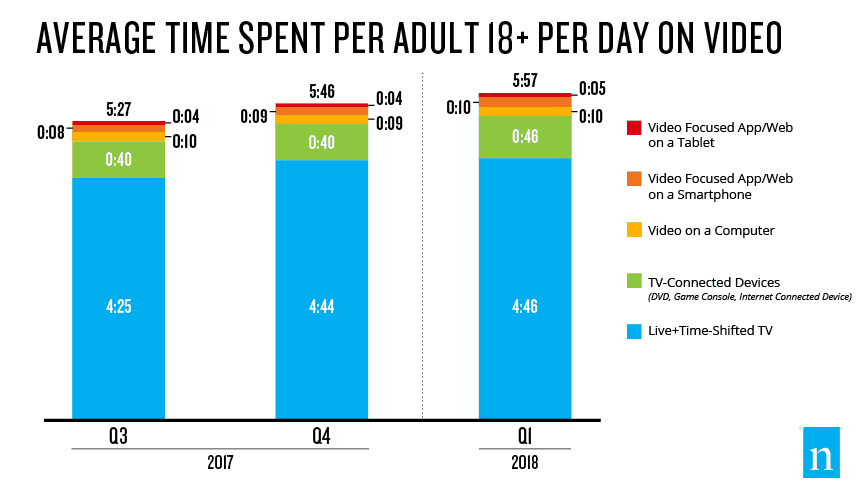
According to Statista, 85% of social media users in the United States watch online videos. Moreover, Nielsen reports that the time spent watching video content has been on a steady increase over the past few years.

Yala is a powerful yet simple social media creation and scheduling tool. It supports integration with Facebook, Twitter, LinkedIn, and Instagram. Also, it brings together video ads with smart schedule posting features. This increases reach and improves brand engagement.

Yala

You’ll Be Able to Easily Organize Your Ads

Additionally, Yala allows you to easily organize your posts and ads. It enables you to efficiently design high-performing video ads and assign posting schedules, all from one place.

Now that you know
what Yala is and what it can do for you, let’s dig deeper to learn more about
its key features and how your business can benefit from them.

Key
Features on Offer with Yala

Here we’ll step through some of the standout features on offer with Yala. This way, you can see how it fits into your existing social media marketing tech stack and whether you think it might be a worthy addition.

Video
Ad Creator

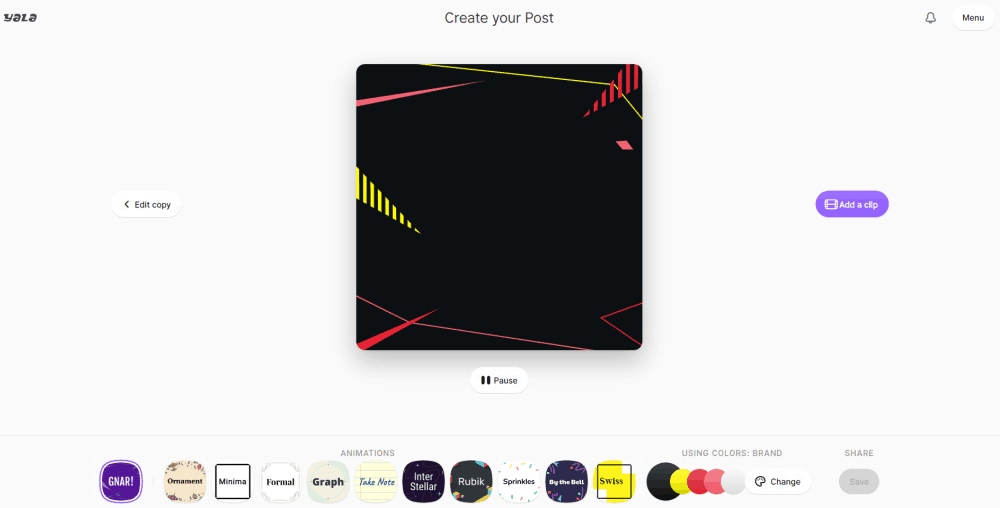
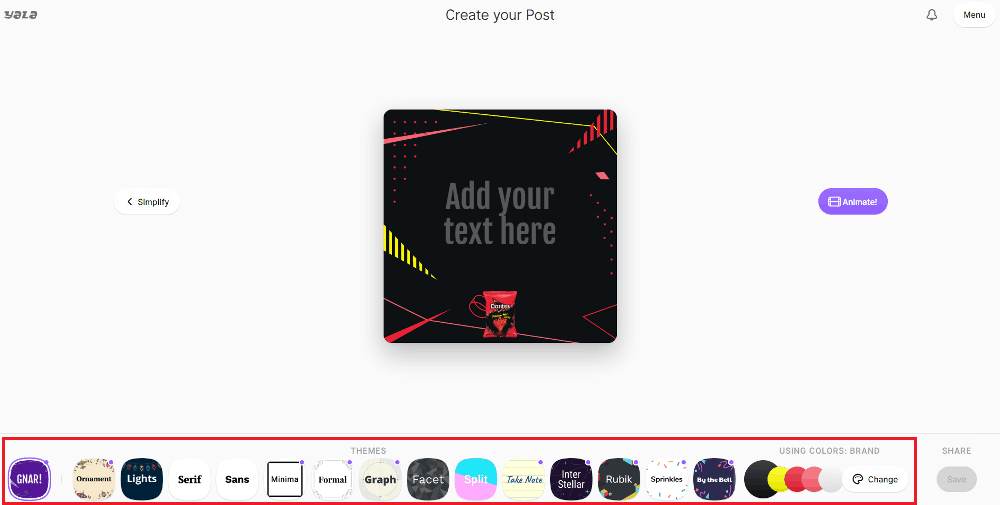
Yala features a neat, point-and-click video creator that makes it incredibly easy to render stunning videos without any technical know-how. Also, for each social video ad, you’ll be able to enter your own marketing copy. Additionally, you can select a custom color palette and choose from a library of backgrounds, animations, and clips to add visual appeal.

Yala - social video ads

Notably, Yala is designed for users who don’t have experience with video production. This means that you won’t have to invest time and money into learning new software. Instead, you’ll be able to focus on increasing your social media presence with social video ads.

A Library of Video and Graphic Design Templates

It also gives you access to a library of video and graphic design templates. These will allow you to quickly create, design, and edit video posts that evoke emotion and engage viewers. You’ll be able to reuse professional-looking graphics and artwork to create social media ads, memes, gifs, and other types of visual content.

Yala

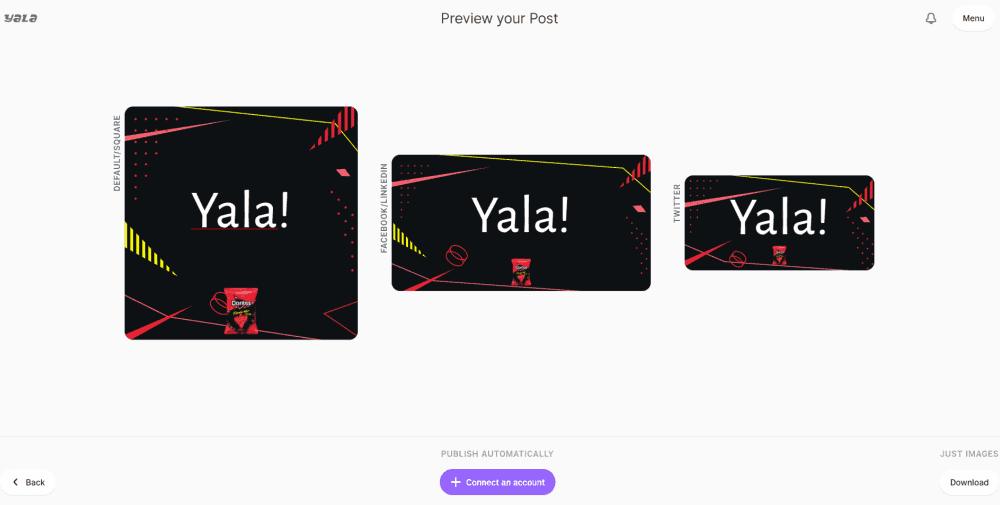
With Yala, you can create an unlimited number of videos. Moreover, you can custom-label them with your own branding—in both mp4 and gif format. Then, you can upload them to your social media profiles within seconds.

Yala is an ideal tool for both freelance and in-house marketers. Yala’s wide range of resources are especially useful for businesses that are looking to gain visibility for their products and services on social media in an easy and cost-effective way.

Automated
Branding and Animations

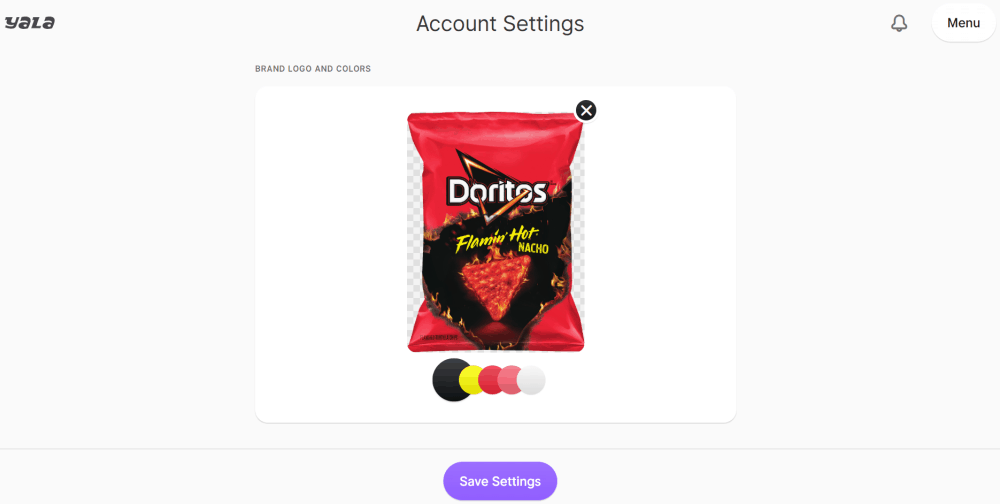
Yala lets you upload your business’s logo to your account. Then it automatically detects the brand colors in your logo and pulls up a matching color palette. Therefore, you’ll have your colors as the primary color options for your social video ads. However, you can also tweak these settings manually. Also, the animations you add to your video ad will automatically adjust to your brand settings.

Yala

Yala enables small businesses to create the same sort of stunning social video ads as the big-budget corporations do.

A Wide Range of Tools for Creating Engaging Social Video Ads

Do you want to increase your social media engagement, get more followers, or simply send out a message to promote your new product? Whatever your purpose, Yala’s automated branding and animations can help you create an engaging social video ad. Moreover, your new ad will boost brand recognition and generate customer interest.

social video ads

Most social media tools let you create colorful static content. However, you need something that catches your target audience’s attention right off the bat. To this end, Yala gives you a number of animation options to choose from. Use these tools to add life to your video ads. For example, take your pick of Sprinkles, Rubik, and Interstellar.

As a result,
you’ll be able to easily create consistent-looking and visually appealing video
ads for your business.

Library
of Human-Centric, Social-Media-First Footage

Yala has a built-in library of original, human-centric video footage. Users can utilize this footage to create engaging social video ads. All of the videos in its library feature people who are relatable and clips that are meant to stir up emotions in viewers.

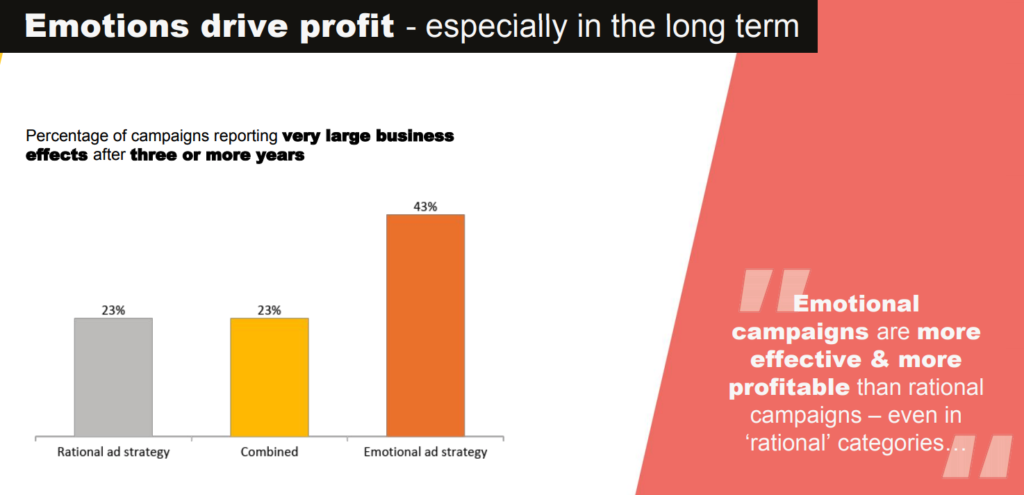
This is especially important. That’s because emotions are what get people to stop swiping and start paying attention. Also, people are more likely to remember and reshare clips that are emotionally driven. In fact, a study by Unruly, along with the UK Institute of Practitioners in Advertising, found that ads that touch people’s emotions have twice as much business impact as ads that appeal to logic.

Yala 7

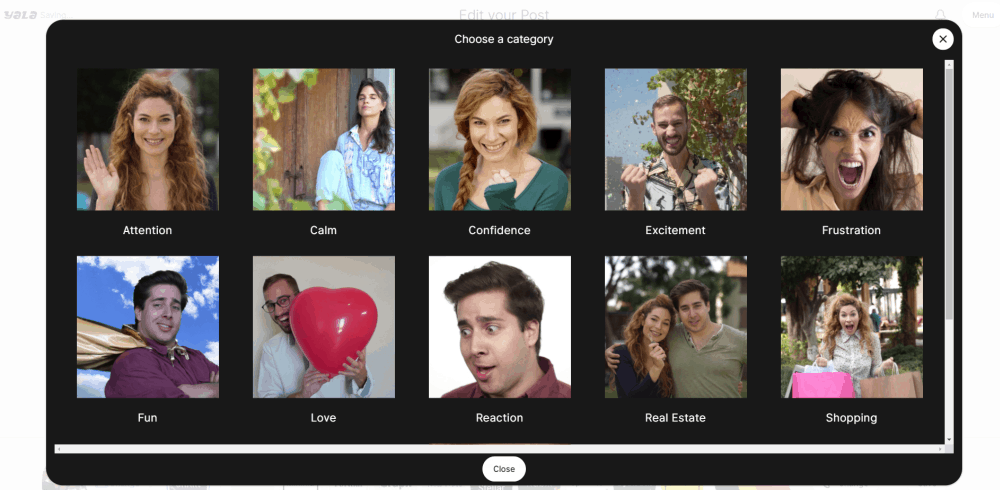
Therefore, Yala offers an extensive library that features different clip categories for different sorts of emotions such as frustration, excitement, calm, confidence, and attention.

Yala 8

While most social media marketing tools only let you add over-used stock clips, memes, and emojis, you need something that’s unique to your brand. That’s because you need to speak to your customers in a direct way.

Perfect for Humanizing Your Brand

Another benefit of making social video ads human-centric is that it enables you to humanize your brand. More and more brands are trying to be personal and human-like in the way they communicate with customers. Seeing people in video ads allows viewers to imagine themselves as the person in the video, using your product, or going through the same experiences.

Therefore, if you’re looking to transform your business into a story-driven brand, Yala is a perfect fit for your social media marketing tech stack. It can help you easily create a stream of cleverly crafted videos and graphics to keep customers engaged with your brand.

AI-Based
Scheduling

Yala’s auto-schedule feature allows you to post video clips to multiple social sites when your target audience is most likely to see your content. This gives your ads more exposure and better engagement rates.

How this works is by tracking which times and posts result in the most likes, shares, and clicks. The AI engine then allows Yala to automatically make corrections, improve itself, and identify patterns that predict the best posting schedule for your videos over time.

Accordingly, you can choose to set the time (or day) when you’d like to post your content. Then, Yala will handle the rest. Additionally, you can configure it to focus on distinct audience segments and engage them with targeted content based on their previous behavior and interactions.

Plans
and Pricing

Yala offers three
different pricing plans. Here’s a full breakdown of what you get with each.

social video ads 8

There’s a “free
forever” plan, as well as plans for $10 or $39 per month. All features are
available to all account levels, with two exceptions. With the free plan, you
can only post directly from Yala to one social media profile, whereas the
others have no limits. And only with the “premium” plan can you remove the
“Made with Yala” bumper from the end of your clips.

Conclusion

Yala is a social media video creation and scheduling tool. Yala makes it easy for small businesses to build and post visually stunning, branded video ads, even if they have no design skills. This is because it gives you access to a library of social-media-friendly templates and human-centric clips. What’s more, you can animate these tools to bring life to your ads.

Let’s quickly
recap some of the ways your business can benefit from using Yala:

  • It’s amazingly easy and affordable to get started with, which means you won’t have to spend time learning how to use video creation software.
  • It comes with a library of human-centric clips that you can add to social video ads to rouse emotions in your viewers and social media followers.
  • It’s the perfect tool for marketers who are looking for a way to boost social media engagement through visually-rich social video ads.


[ad_2]

Source link

Filed Under: Biz Opportunities

Most U.S. Cannabis Cultivators Choose to Compete on Quality Rather Than Cost (Chart)

July 19, 2019 by Asif Nazeer Leave a Comment

[ad_1]

Many wholesale growers are focusing on cannabis quality, though market forces tend to favor those who reliably supply low-cost cannabis.


July
19, 2019

2 min read


This story originally appeared on MJBizDaily

Many wholesale cannabis growers choose to compete on quality, even while market forces favor growers who can reliably supply low-cost cannabis.

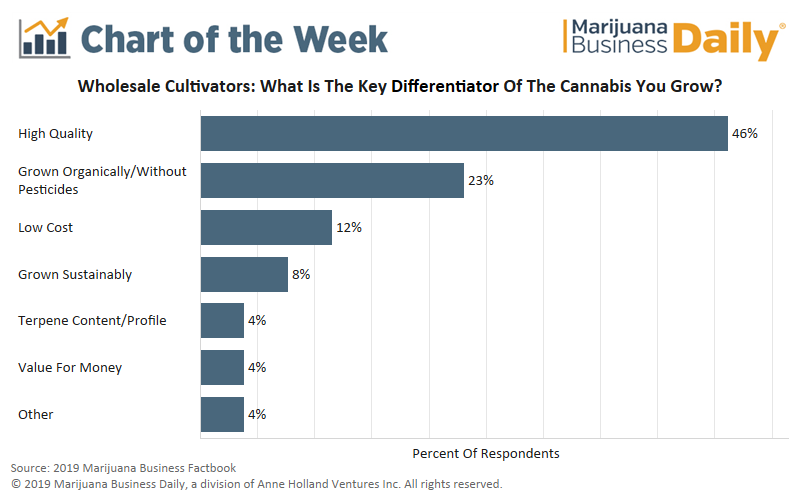
Nearly half of U.S. cultivators are attempting to make high-quality flower their key differentiator, according to the recently released 2019 Marijuana Business Factbook. But with flower sales on the decline, the market likely will prove unable to sustain that proportion of growers competing on those grounds alone.

In the extract market, consumers have shown a preference for high-potency, low-cost concentrates, creating high demand for inexpensive flower. Demand for high-quality concentrates may increase as cannabis use continues to become more mainstream, though it’s unlikely to supplant low-cost, value-oriented concentrates in the near future.

While there may be an immediate opportunity for growers to specialize in and provide low-cost product if and when marijuana is legalized at the federal level, all but the largest and most efficient cultivators ultimately may be squeezed out of the market for value cannabis.

If large-scale retailers, such as big-box and grocery stores, eventually are able to sell cannabis, these outlets likely will offer prices that small-scale producers cannot match. However, experienced marijuana business owners caution that as cannabis becomes a commodity, the value of a company is more dependent upon brand reputation and products lineup than price.

Value-added cultivation — such as sustainable and organic production — could emerge as a key segment similar to the food industry. That creates a proverbial tightrope for cultivators to walk: They need to understand that meeting the current needs of the market for low-cost cannabis could come at a huge price if a major shake-up — such as federal legalization — occurs.

[ad_2]

Source link

Filed Under: Entrepreneur

The Historical Basketball League is Disrupting the NCAA

July 19, 2019 by Asif Nazeer Leave a Comment

[ad_1]

One of my favorite conferences to attend every year is the annual Sports and Entertainment Alliance in Technology (SEAT) conference. It’s one of the leading events for C-level execs at professional sports teams and leagues. This includes the NFL, NBA, MLB and MLS. But it also includes major college athletic departments. And it’s the only business conference I know of where I can moderate a general session panel while wearing my Eric Dickerson authentic throwback jersey.

Historical Basketball League

Speaking of which, I had the pleasure of hosting a fireside chat with two of the C-level executives of the Historical Basketball League (HBL).  I’m talking about CEO and cofounder Ricky Volante and COO David West. David also played 15 years in the NBA and was a two-time champion with the Golden State Warriors. The chat was all about the HBL.

This startup basketball league looks to provide college athletes with an alternative pathway to the NBA. So it seeks to disrupt the NCAA’s stranglehold by paying athletes, giving them scholarships and allowing them to benefit financially on their own personal brands. The discussion proved so interesting. So my CRM Playaz partner Paul Greenberg and I asked Ricky and David to join us for an episode. So we can dig in a bit more and discuss why they decided to challenge an organization with the power and clout of the NCAA.

Below you’ll find an edited transcript of our conversation. To see the full conversation watch the video or click on the embedded SoundCloud player below.

The Historical Basketball League is Disrupting the NCAABrent Leary: So, Historical Basketball League. You got to tell us what it’s all about and you also got to tell us about the name too.

Ricky Volante: Yeah, so I guess we’ll start with what it’s about. We’re trying to become the primary destination for elite college basketball players across the globe competing directly with the NCAA and then to some extent also with organizations like the MBL and the G League, but we’re trying to become that 18 to 23 year olds that are the best in the world at what they do in terms of college basketball, we want them to be playing in our league. Yeah, if you want to-

David West: Yeah. Again, a lot with Ricky said, we were aiming to become the premier destination for college basketball athletes to start. We want to create an environment that is centered around them and give them options and opportunities that benefit them more than the universities.

Ricky Volante: The name itself. So, in 1929 the Carnegie Foundation had a commission that was similar to what Condoleezza Rice recently did with the NCAA and what they were trying to do was determine whether or not universities were providing anything beyond a scholarship to their college athletes and so, they surveyed 121 universities and found that 84 of them were outright paying players.

When you think back to that point of time, Harvard was a football powerhouse. Why? Harvard paid more than everybody else and nothing more than that. I mean, Harvard was one of the first super stadiums within college football. They redevelop them and the University of Pennsylvania pretty much changed the entire landscape of college football building the first 30 and 40 and 50,000 seat stadiums back in the beginning of the 20th century and again, that’s because they were paying more than the other universities.

Brent Leary: It wasn’t because of the Ivy League and all. It was about cash-

Ricky Volante: I’m sure that there are Ivy Leaguer’s that’ll tell you that it was because of the education. It was not because they were paying the most.

Brent Leary: Wow. All right. So, let’s talk about why you guys founded to do this. What was the reason that you just wanted to come out and pretty much try to disrupt what the NCAA is all about?

David West: Yeah, I think first of all, it’s the right thing to do. When I was looking at the layout of the league and the concepts behind it and what the intent was, it was just the right thing to do. There’s career opportunities that exist off the backs of the labor of these young athletes and they are the people that have the fewest opportunities, the fewest career choices, particularly while they’re in school. So, the model that we have is just the right model to present to the market at this time.

Paul Greenberg: So, fill us in a little more on the actual model, what you’re actually going to do with these athletes and what your plan is for you too.

The Historical Basketball League is Disrupting the NCAA

Ricky Volante: Yeah. So to start with, we’re a single entity. So, we’re going to have eight teams. The cities that those teams are going to be located in going north to south, Philadelphia, Baltimore, Washington, DC, Richmond and Norfolk, Virginia, Raleigh and Charlotte, North Carolina and Atlanta.

Paul Greenberg: And why that?

Ricky Volante: Atlanta was a critical one for us, but overall if you break down those markets, Atlanta, Philadelphia, and DC are three of the top 10 markets in the US. When you throw in Baltimore and Charlotte, you’ve got five of the top 21 markets in the US and then Richmond, Norfolk and Raleigh, where a lot of people might scratch their heads and say, “How can you throw those in with the others?” They ranked as three of the top eight markets in terms of NBA viewership and so, Norfolk was number one, Raleigh was number seven and Richmond was number eight.

Paul Greenberg: So, what becomes the value to the athlete?

Ricky Volante: First and foremost, we’re going to be providing them with salaries, salaries of 50 to $150,000 per season. Beyond that, we’re also providing them with five year guaranteed scholarships, which can be completed on a non-continuous base or on a continuous basis. So, if they go to the NBA, they can come back and complete it at a later date. In addition to that, there are not restrictions on name, image and likeness.

So, they can sign endorsement deals, they can have agents, they can have financial planners, they can have attorneys, all the things that in some way shape or form is either impermissible or severely restricted by the NCAA. We felt taking a focus on having it as player centric as possible would allow us to bring in maybe not all, but a good percentage of the elite basketball players in the US and globally and then from there your revenue streams, going back to your question about the business side, people are going to tune in and watch.

Companies are going to want to be associated with these athletes. Another thing that happens within college is you have this inefficient relationship between sponsors and players because the sponsorship deals can’t be directly with the players. They have to be with the university, which means you have to work through the athletic department, which means the players get nothing out of it. So, the athletic department is playing middleman. The Athletic Department forces the athletes to participate. They’re getting nothing out of it.

Brent Leary: What I like about the model is people are getting salaries. They’re getting paid. But they’re also getting scholarships. So, instead of having to be tied to the university who’s under the NCAA rules, which restricts money they can make. Now, you’re basically allowing these athletes to get a salary. Find the college of their choice and then you give scholarship money for them to go to that. And they get the opportunity to build their own brand and actually make money off of their own brand as opposed to the NCAA making money off of their brand.

David West: Right. And in the most simplified form is it’s just you have a student who has a summer job, right? So, these guys’ job is in the summer. Their job just happens to be basketball. In the fall, winter and spring, they are students where they are developing and training in an academic pursuit that fits their needs. And is best going to serve them as they look forward to their professional futures.

Ricky Volante: It’s a great analogy in a lot of ways and when you think about it, for CS majors, Google has a program that pays a CS major, if you get into it, $100,000 for the summer. None of us would ever think-

Brent Leary: For the summer?

Ricky Volante: Yeah.

Paul Greenberg: OK we’re done with the show… We have to go fill out a job application.

Ricky Volante: None of us would, in our craziest minds think that makes that student’s academic experience less meaningful because they’re getting paid while they’re in college. All of us were like, “No, that’s exactly what you should be doing.” If you develop an app, if Google itself was developed out of a Stanford course once upon a time, it’s Stanford doesn’t get 100% ownership of that as a result of the fact that it was developed in a Stanford class. So, there’s those types of things that again, it would be insane for us to say that Stanford should have had 100% ownership rights of Google, but if a Stanford athlete is playing for Stanford, they pretty much do.

Paul Greenberg: One of your criteria was they have to be a college student. Now, let’s say they’re incredibly talented, but not college student and when I say not college, I’m deliberately not saying high school because if you remember years ago, huge amount of street talent in New York for example, right? So, what about those kids?

David West: That’s why we aren’t going to try to fit a square peg into a circular hole. We’re going to work with those kids and their families and our academic advisors and our nonprofit to find an education that suits their needs. So, we’re not going to say, “Okay, you’ve got to go to this university.” No, we’re going to say we’ll identify the kids. We know the kids that don’t fit the traditional classroom model, but we can put them in a trade school-

Paul Greenberg: And you’ll work with them, get them into the trade school?

David West: We’re going to work to get them into … Each one of our student athletes are going to have an educational track that they’re on and I guess no singular athlete will have the… There won’t be a cookie cutter look at it. We’re going to be very nimble with it. We’re going to make sure that it suits the needs of that athlete And we’re going to utilize the community college network, local college, smaller universities, online curriculums, like we said vocational and trade schools if we have to, but we’re going to find some education that fits each one of our athletes.

Ricky Volante: And that’s part of what we want to do is instill upon these guys what they can do on and off the court and how everything off the court impacts what they do on the court as well. So, financial literacy, public speaking, media training, selecting and vetting agents, all these things that whether you like it or not, it’s going to impact how successful you are as an athlete.

Brent Leary: And you were saying you don’t get that from college. You talked to a lot of young talent and if things don’t go the way they expect them to go, they’re lost.

David West: Most athletes today are in educational tracks that meet the needs of their athletic requirements, right? So, your schedule, your schooling, your major, your class schedule is all built around to make you most available for athletics. So, there’s very little space or room for the guys who want to pursue certain academic tracks. If it interferes with your sport, then that’s something that’s off the table, right? Because you go to that school as an athlete first. Particularly the scholarship athletes. And that’s one of the narratives we want to change. And we want to fight, right? Players have the right, if they want to commit themselves to the sport.

Sports are a global phenomenon and a massive opportunity, not just at the player level. But the whole range of athletics can be available to these guys. So, for us it’s most important to put them in tracks that fit what they want to do. And fit what we ask them. What is your idea? What are you gonna do after sport? What are you going to do while you’re in sport? Because as a professional and former professional now, the conversation is, for us, once you become a pro, you can’t wait to figure out your next step when the basketball is done.

So, you’ve got to start figuring out your next steps while you’re in your career and that’s relatively new for professional athletes because we were trained and brought up to put all of our eggs in this basket and then for this younger generation, this new, this future athlete, they have all types of interests and they have all types of ideas and things that they wanna pursue such as being media mavens.

I mean, these guys are talented, they have other things that peak their interest and basketball is still their centerpiece, but they don’t buy into the idea that they’ve got to deny these other aspects of themselves and not build these other aspects of themselves just to play the sport.

Ricky Volante: That’s part of how we want to reshape how people view college athletes to start with, but athletes overall; they aren’t just athletes. A lot of people only think of it in that term that an athlete is an athlete. They have huge significant platforms. They have significant influence and we want to be able to again start to shape that a little earlier so that these guys understand going into the NBA, this is what I can accomplish, not just on the court.

But off the court to have a more profound success on my community, where I came from, from my family, all those types of things because a lot of these guys come from low socioeconomic backgrounds and that’s part of the stress that is associated with the current system is that these guys have to go a year unpaid and again they come from families that live below the poverty line. They’ve got people that are counting on them to make it.

Brent Leary: This has been great. But I got to throw one thing out there. I mean, you are going up against the NCAA. And all the power and money they have. So, what are the things that keep you up at night the most? What are the biggest challenges that you foresee with battling a behemoth?

Ricky Volante: Well, I’ll start my answer by saying mountains are there to be climbed. So, this absolutely it’s going to be a mountain. We aren’t shying away from that. They were formed in 1906. College sports generates about $13 billion a year. The financial power and economic power that they can wield is significant. And it’s not just the NCAA. A lot of people think about it in just those terms.

There’s a lot of institutions and corporations and donors and alums and universities out there that all benefit from the status quo remaining as it is. And so, there’s a lot of people out there that if we’re successful, their pockets are going to get a little lighter. So, for us it’s about maneuvering and finding the right groups that want to be associated with us and work with us.

Take distribution as an example. Looking at purely digital companies that don’t have long standing relationships with the NCAA or conferences. And there’s a lot of them out there that people don’t even realize. Facebook Watch, Amazon Prime, Twitch, Flow Sports, 11 Sports, Caffeine Stadium. And I’m sure I’m missing a whole bunch.

Once upon a time when leagues were trying to compete against, whether it’s the NFL or the MLB or whatever, you had four channels. Sometimes two or three channels. And those were your only options to distribute. That’s no longer a challenge today.

We can get the product in front of people, but it’s about finding mission-aligned investors, going back to your original question now. Mission-aligned investors who understand what we’re trying to accomplish as much on the court as off the court. People that are going to understand that this is going to take time to develop and develop the right way.

What we launch with next June, a decade from now is probably going to look very — those two products are probably going to look very different. But because we have a clean slate, because we don’t have a century’s worth of policies and procedures that have always been in place that we have to follow. We can tweak and go back and forth on different things to find out what the fans want. What’s going to be supported. What the players want and so, I mean, yeah, it’s all a challenge. But if it was easy, someone would have already done what we’re doing.

This is part of the One-on-One Interview series with thought leaders. The transcript has been edited for publication. If it’s an audio or video interview, click on the embedded player above, or subscribe via iTunes or via Stitcher.


[ad_2]

Source link

Filed Under: Strategy

Ready to Start Freelancing? Kick Off on the Right Foot – Business Ideas

July 17, 2019 by Asif Nazeer Leave a Comment

[ad_1]

Photo by Brooke Cagle on Unsplash

There are a number of reasons why you might want to start freelancing. Maybe you just want to make a little money on the side. Or maybe you’d like to start freelancing so you can eventually be your own boss.

Now Is a Great Time to Start Freelancing

With freelance platforms growing and more companies looking for that outsourced creative, it’s now becoming crystal clear we’re living in an increasingly gig-based economy.

This is something Charles Towers-Clark at Forbes calls the “uberization of work.” By this he is referring to traditional work that has turned into freelance contracts. Simply put, digital channels make location-independent work possible today. And this makes it easier than ever for many people to start freelancing.

All the same, life can get a little rough when you first start freelancing. Basically, this way of working comes with pros and cons, even though working more flexibly on a job-by-job basis is touted by some as the ultimate in employment.

And it’s true that when you start freelancing you experience a lot of freedom. “However,” writes Towers-Clark, “part-time workers do not have the same benefits as full-time employees do, leaving them without the job security and peace of mind that nine-to-fivers enjoy.”

So while there are a number of reasons why you might want to start freelancing, it can pay to give this big change in your life some thought before you take the plunge. Therefore, consider: Do you just want to earn some pocket money on the side? Or do you want to start your own freelancing business?

Whatever the case, you’ll need the right tools to succeed. Many people who started freelancing say it’s fantastic. However, it’s not necessarily the easiest way to make a living. You’ll need the right processes to take advantage of the sense of freedom. In other words, if you decide to start freelancing, you want to avoid being left without peace of mind.

Three areas in particular can make or break your peace of mind when you start freelancing. These three areas are communication, invoicing, and continual learning.

Put Your Best Foot Forward with Great Communication

“Communication is a big part of your success as a freelancer,” writes Richard Lorenzen at HuffPost. “What steps will you take to put your best foot forward?”

The
following two rules will serve you well when you start freelancing:

  1. Under-promise but over-deliver
  2. Communicate clearly and often

The
importance of Rule #2 cannot be overstated. Ask clarifying questions, send
updates, and follow up, even after a project has been completed. This will
almost certainly set you apart from other freelancers your clients work with.

Also, when
you start freelancing, learn to make use of the wide range of communication
tools you have at your disposal today. For example:

  • Set up a business number with Skype to keep texts and calls as seamless as possible
  • Get on Google Hangouts as soon as you start freelancing, for free and easy face-to-face meetings
  • If your client is on Slack, ask to be added to a channel so you can keep up with the whole team
  • Look at collaboration tools like Trello or Basecamp to make the back-and-forth on projects easier
  • When you start freelancing, also start using an organizational tool and learn to use it well. Perhaps you’ll choose Wunderlist to keep things straight or Evernote to track everything related to a project. Either of these tools will help you with communication, project completion, and everything in between.

RELATED ARTICLE: WANT TO LOOK MORE PROFESSIONAL? CONSIDER THESE 7 LITTLE TOUCHES

Use Professional Invoices When You Start Freelancing

One of the things you’ll soon learn after you start freelancing is that getting paid can be tricky. In other words, it’s not easy to establish a steady cash flow.

It’s certainly satisfying to see a paycheck roll in after you have successfully completed a project. On the other hand, having to chase after a paycheck can be troublesome.

However, you can avoid those difficulties if you use a professional invoice as the foundation of your payment process.

Additionally, clients appreciate an invoice that is clear and professional, one that is reflective of your work as a contractor or freelancer. Therefore, instead of presenting an invoice that shows only a lump sum, spell out the work you’ve completed, line by line.

Make your invoices as professional as possible. In other words, be sure to include your contact information, clear lines, and perhaps a little pop of color. Starting with an accurate and professional invoice will decrease your chances of having to deal with the headache of unpaid invoices. 

To this end, there are a handful of online billing software tools that can help you when you start freelancing. These will aid you in connecting with clients for payment. However, some of these tools can be overly complicated, and this can be particularly true if you just started freelancing.

Therefore, when you first start freelancing, you need something simple but professional.

For a happy medium between “let-me-jot-something-down-in-Word” and “let-me-figure-out-this-fancy-schmancy-accounting-software,” consider putting a freelance invoice template to use. With a template, you can keep the invoice tidy and professional, but also tailor it to your needs.

invoices for freelancers
Source: InvoiceSimple.com

Moreover, you can use a template to provide a professional quality to more than just your invoices. “If you find yourself struggling to format project proposals, meeting agendas, or customer invoices, use a template you can quickly modify as needed,” writes John Boitnott at Inc. “This way you don’t have to start from scratch every time.”

So save yourself some time and stand out from the crowd when you start freelancing. You will be way ahead of other beginning freelancers when you use an invoice template.

Keep on Learning

Finally, the best freelancers are always learning, long past the time when they first started freelancing. Even if you are a master graphic designer or stellar writer, there is always something new to learn.

Maybe you need to read up on marketing for your newly established business. On the other hand, perhaps you should review some new tools for your photography business. When you start freelancing, establish a habit of spending a few hours each week finding out what’s new in your niche and in the freelancing industry as a whole.

In order to keep learning, use the abundant resources of the Internet. They are practically endless.

For example, go to Udemy or Skillshare and take an entire course in an area that will be useful to your freelancing career. Read Neil Patel or the Hubspot blog to learn more about marketing best practices. And be sure to check out Inc or Work Made for Hire to polish your professional skills.

You get the idea. Once you start freelancing and stick with it for a while, you’ll see that you must continuously learn new things, especially within your own niche. It may seem like a lot of effort at first, and perhaps it is. But learning new things will make a big difference not only as you start freelancing but also as you take your place as a successful freelancer.

[ad_2]

Source link

Filed Under: Biz Opportunities

  • « Previous Page
  • 1
  • …
  • 84
  • 85
  • 86
  • 87
  • 88
  • …
  • 172
  • Next Page »

Sign up for our newsletter and receive a free EBook on how to boost productivity


Find it

Blog By

Small Business Consultant and Accountant helping grow your small business Read More…

Follow us online

  • Email
  • LinkedIn
  • Twitter

Recent Posts

Unlock Small Business Triumph: Your Definitive Guide to Success

Small Business Topics: A Comprehensive Guide for Success As a … [Read More...]

  • Why the F&B Sector Needs Streamlined Payment Methods – Business
  • The Rise of AI in Ecommerce Outsourcing – Ecommerce
  • The Benefits of Turnkey Tech Solutions for Forex Brokers – Business

Archives

  • December 2024 (1)
  • March 2024 (2)
  • February 2024 (3)
  • January 2024 (1)
  • December 2023 (3)
  • November 2023 (1)
  • October 2023 (3)
  • September 2023 (6)
  • August 2023 (1)
  • July 2023 (5)
  • June 2023 (16)
  • May 2023 (1)
  • April 2023 (2)
  • March 2023 (4)
  • February 2023 (2)
  • January 2023 (5)
  • December 2022 (5)
  • November 2022 (8)
  • October 2022 (7)
  • September 2022 (6)
  • August 2022 (6)
  • July 2022 (13)
  • June 2022 (11)
  • May 2022 (7)
  • April 2022 (8)
  • March 2022 (12)
  • February 2022 (8)
  • January 2022 (11)
  • December 2021 (9)
  • November 2021 (10)
  • October 2021 (11)
  • September 2021 (3)
  • August 2021 (10)
  • July 2021 (12)
  • June 2021 (5)
  • May 2021 (10)
  • April 2021 (17)
  • March 2021 (40)
  • February 2021 (39)
  • January 2021 (58)
  • December 2020 (66)
  • November 2020 (59)
  • October 2020 (34)
  • September 2020 (47)
  • August 2020 (37)
  • July 2020 (2)
  • May 2020 (1)
  • April 2020 (1)
  • March 2020 (33)
  • February 2020 (25)
  • January 2020 (20)
  • December 2019 (27)
  • November 2019 (28)
  • October 2019 (34)
  • September 2019 (38)
  • August 2019 (13)
  • July 2019 (44)
  • June 2019 (40)
  • May 2019 (58)
  • April 2019 (51)
  • March 2019 (43)
  • February 2019 (44)
  • January 2019 (43)
  • December 2018 (47)
  • November 2018 (43)
  • October 2018 (58)
  • September 2018 (44)
  • August 2018 (60)
  • July 2018 (49)
  • June 2018 (58)
  • May 2018 (54)
  • April 2018 (39)
  • March 2018 (46)
  • February 2018 (48)

Topics Covered

business consulting business growth business management business marketing business strategy business topics small business small business success small business topics

Biz Opps

[ad_1] Featured image by Blake Wisz on … [Read More...]

[ad_1] Are you looking for the best ways … [Read More...]

[ad_1] Featured image by … [Read More...]

Customer Focus

[ad_1] First published in Exchange, the magazine … [Read More...]

Entrepreneurs

[ad_1] Uptown Cheapskate is a resale … [Read More...]

[ad_1] A team of neuroscientists in the … [Read More...]

[ad_1] This article was translated … [Read More...]

Strategy

[ad_1] If you buy something through our links, we … [Read More...]

[ad_1] In helping celebrate Black History Month, … [Read More...]

[ad_1] ZOHO started its current Email Marketing … [Read More...]

Supply Chain

[ad_1] Although managing inbound shipping can be … [Read More...]

© Copyright 2015 iSmall-Business.net · All Rights Reserved · Powered by ISmall-Business.net · Admin